
You're here because your marketing isn't working, your team's guessing, or you're drowning in agencies promising "brand awareness" without showing you the revenue. Sound familiar? Choosing a marketing agency shouldn't feel like throwing money at a wall and hoping something sticks—but that's exactly what happens when pricing stays vague, results go unmeasured, and everyone claims they're "different."
Here's what most agencies won't tell you: pretty campaigns don't pay your bills. Conversions do. This guide cuts through the marketing fluff with actual pricing ranges, real ROI benchmarks, and the specific red flags that separate agencies who deliver measurable growth from those who just build their portfolio on your dime.
You'll learn exactly what a marketing agency costs ($2,500 to $15,000+ monthly), how long results actually take (spoiler: not overnight), which type of agency fits your business size and goals, and the eight non-negotiable questions to ask before signing anything. No guessing. Just the data-backed framework you need to stop bleeding revenue and start converting.

Start Here: What You Need Most Right Now
If you're researching marketing agencies for the first time: Read "What Is a Marketing Agency?" and "7 Types of Marketing Agencies" to understand your options.
If you're comparing agency proposals: Jump to "What Marketing Agencies Actually Cost" and "How to Choose the Right Marketing Agency" for the evaluation framework.
If you're unsure whether you need an agency: Read "5 Signs You Need a Marketing Agency Now" and take the self-assessment scorecard.
If you've been burned before: Go straight to "7 Expensive Mistakes" and "Marketing Agency ROI & Performance Metrics" to know what to demand this time.
📋 Your Marketing Agency Evaluation Checklist
Print this and use it during every agency consultation:
Before the Meeting:
- [ ] Researched their case studies and verified client results
- [ ] Checked online reviews (Google, Clutch, BBB)
- [ ] Prepared list of your top 3 business goals
- [ ] Documented current marketing performance baseline
- [ ] Set realistic budget range ($____ to $____ monthly)
During the Consultation:
- [ ] Asked to see 3+ case studies with measurable results
- [ ] Requested ROI projections specific to my industry
- [ ] Confirmed who will actually execute the work
- [ ] Reviewed their testing and optimization process
- [ ] Discussed contract length and cancellation terms
- [ ] Asked for 3 client references I can call
- [ ] Clarified what's included vs. what costs extra
After the Meeting:
- [ ] Called their client references
- [ ] Compared proposals from 3+ agencies
- [ ] Verified all pricing is transparent and itemized
- [ ] Checked that contract has reasonable exit terms
- [ ] Confirmed they'll grant full account access/ownership
Deal-Breakers (Walk Away If):
- [ ] Won't share specific case study data
- [ ] Require 12+ month contracts with no trial
- [ ] Can't explain strategy in plain English
- [ ] Guarantee #1 rankings or specific results
- [ ] Refuse to provide client references
- [ ] Won't commit to specific deliverables/timeline
- [ ] Claim they own your accounts or data
What Is a Marketing Agency? (Quick Answer)
A marketing agency is a specialized firm that develops and executes data-driven marketing strategies to increase brand visibility, generate leads, and drive measurable revenue growth. Marketing companies provide expertise in digital marketing, content creation, SEO, paid advertising, and analytics that most businesses lack in-house. Unlike building an internal marketing team from scratch (expensive, slow, risky), professional marketing firms deliver proven systems, cross-industry experience, and specialized skills across multiple channels—all focused on one thing: growing your bottom line.
The core difference between hiring a marketing agency versus doing it yourself? Speed and expertise. While your business focuses on delivering your product or service, professional marketing agencies focus exclusively on mastering the psychological triggers, platform algorithms, and conversion tactics that turn browsers into buyers. They've already made the expensive mistakes. You get the benefit of their 500+ implementations without the trial-and-error cost.
Think of it this way: you wouldn't hire a general contractor to perform brain surgery. Marketing agencies are specialists who bring brain science—literally—to your campaigns. Whether you need a full-service advertising agency, a specialized digital marketing firm, or a conversion-focused marketing company, the best ones don't just make your brand look good. They make your revenue grow predictably and measurably.
How Do Marketing Agencies Actually Work? (The Real Process)
Most marketing agencies follow a process. The good ones follow a system that's been tested across hundreds of implementations. There's a massive difference between digital marketing agencies that design for their portfolio and those that engineer for your bottom line.
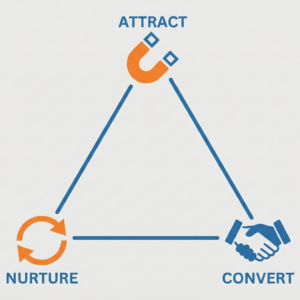
Here's how performance-driven marketing agencies actually work: they apply the Growth Triangle™ framework—Attract the right eyeballs, Nurture the relationship, Convert them into customers who buy (or donors who give). Every tactic, every campaign, every piece of content gets evaluated against these three stages. If it doesn't move someone through the triangle, it's expensive noise.
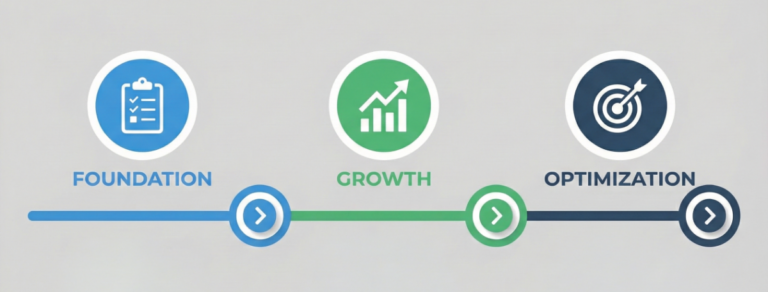
Month 1: Discovery & Audit (The foundation that separates winners from losers)
The first 30 days aren't about posting on Instagram or launching ads. Agencies worth their retainer? They conduct a comprehensive audit of your current marketing, website performance, and competitive landscape. Think of it as a 200-point conversion diagnostic—identifying where you're hemorrhaging potential customers before they ever reach checkout.
They're analyzing your website's first-impression failures (you've got 50 milliseconds before trust's won or lost), mapping your customer journey for psychological friction points, and running competitive intelligence to see what's actually working in your market. Not what looks pretty. What converts.
Months 2-4: Strategic Implementation
This is where brain science meets execution. Based on the audit findings, agencies build campaigns targeting your ideal customers' psychological triggers—not random "creative ideas" someone had in a brainstorming session. They implement across multiple channels simultaneously because isolated tactics are just expensive chaos.
SEO gets optimized for search intent, not just keywords. Paid advertising targets behavior patterns, not demographics. Email sequences nurture based on engagement signals. Social content uses hook-writing methodology that actually stops the scroll. Video production leverages research-backed storytelling for maximum emotional impact.
Everything is measurable. Everything is trackable. Everything ties back to revenue—not vanity metrics like "impressions" or "reach."
Months 5-6: Optimization & Scaling
By month five, you have real data on what's working. This is when agencies separate themselves. The mediocre ones keep doing what they've always done. Performance agencies double down on winners and kill losers ruthlessly.
They're A/B testing landing pages, refining audience segments, adjusting bid strategies, and scaling budget into proven channels. Conversion rates improve 30-60% on average during this phase because the guesswork is gone. You're operating on evidence.
Months 7-12: Compounding Growth
Here's where marketing ROI doesn't just improve—it multiplies. When your website converts better, your Google Business Profile dominates local search, and your video content creates emotional connections, the three revenue drivers work together exponentially. This is the Triple Foundation System in action.
Competitors who are still arguing about "more social posts" versus "better SEO" don't understand that integrated strategy generates 3x better results than isolated tactics. Your marketing becomes a system, not a collection of random campaigns.
The Timeline Reality Check
SEO takes 4-6 months to show meaningful organic traffic growth. PPC can generate leads in 2-4 weeks but needs 60-90 days to optimize cost per acquisition. Social media builds community over 3-6 months. Email nurturing shows ROI in 30-60 days with proper segmentation.
Anyone promising "page one rankings in 30 days" or "instant viral growth" is either lying or using tactics that'll get you penalized. Real growth is built on testing, data, and relentless optimization—not magic tricks.

7 Types of Marketing Agencies: Complete Breakdown
Not all marketing agencies are created equal. Digital marketing firms, full-service agencies, creative shops, and advertising companies—they all call themselves "marketing agencies" but deliver vastly different services and results. Some specialize in pretty pictures. Others specialize in making your phone ring. The difference? About $100,000 per year in wasted budget if you pick wrong.
Knowing which type fits your business size, budget, and growth stage prevents expensive mistakes and wasted months.
Quick decision guide: Revenue under $500K? Start with a specialized digital agency. $500K-$2M? Consider a growth-focused marketing firm. Over $2M? Full-service agency or hybrid model with multiple specialists. That said, revenue alone doesn't tell the whole story—your market maturity and internal capabilities matter too.
1. Full-Service Marketing Agencies
What They Do: Everything from strategy and branding to SEO, paid ads, social media, email, web design, video production, and analytics. One team, one integrated strategy, zero vendor headaches.
Pricing Range: $5,000–$15,000+ monthly retainer
Best For: Businesses ready to scale with serious revenue goals ($1M+) who need coordinated campaigns across multiple channels. Companies tired of hiring one agency for social, another for SEO, and watching nothing connect.
Pros: Complete marketing department without hiring overhead. All tactics work together instead of competing. Single point of accountability. Faster execution because teams collaborate internally.
Cons: Higher investment. May include services you don't need yet. Some full-service agencies are "jacks of all trades, masters of none"—verify expertise depth.
Red Flags: If they claim expertise in 15+ industries, they're probably generalists. Ask for case studies in your specific vertical with actual KPIs, not testimonials.
2. Digital Marketing Agencies
What They Do: Focus exclusively on online channels—SEO, PPC, social media advertising, email marketing, content marketing, and web analytics. They've abandoned billboards and radio for pixels and algorithms.
Pricing Range: $3,000–$10,000 monthly
Best For: Businesses where customers research and buy online. E-commerce, SaaS, B2B service companies, and any organization where Google search behavior drives revenue.
Pros: Deep expertise in digital platforms and algorithms. Usually more affordable than full-service. Faster to adapt to platform changes (Google updates, Meta algorithm shifts).
Cons: Won't help with traditional media if your audience still responds to direct mail or radio. May lack brand strategy depth.
Red Flags: Agencies that promise "we'll handle everything" but outsource specialized work to freelancers (ask who's actually doing the work). Watch for 30% markup on outsourced services.
3. Specialized Marketing Agencies
What They Do: Deep expertise in one or two channels—SEO-only, PPC-only, social media management, or video production specialists. Think laser focus, not broad coverage.
Pricing Range: $2,500–$8,000 monthly (depends on specialty)
Best For: Businesses with existing marketing teams who need expertise in one critical area. Companies where one channel drives most revenue (SEO for SaaS, video for nonprofits).
Pros: Unmatched depth in their specialty. Usually more affordable. Great for filling specific gaps in your strategy.
Cons: You still need someone to orchestrate the overall strategy. Multiple specialized agencies rarely coordinate well together. Creates vendor management overhead.
Red Flags: If an SEO agency also offers "full brand strategy" or a video production company promises "complete digital transformation," they're probably overselling their actual expertise.
4. Industry-Specific Agencies
What They Do: Focus exclusively on one industry vertical—healthcare marketing, nonprofit fundraising, restaurant promotion, B2B manufacturing, legal services, or e-commerce. They speak your language and know your compliance requirements.
Pricing Range: $4,000–$12,000 monthly
Best For: Highly regulated industries (healthcare, legal, financial) or niches with unique buying cycles and customer psychology (nonprofits, SaaS, restaurants).
Pros: They already know your customer journey, competitive landscape, and industry regulations. Faster ramp-up time. Portfolio includes your exact customer type.
Cons: Less exposure to cross-industry innovation. May be stuck in "how we've always done it" thinking. Higher rates due to specialized knowledge.
Red Flags: Verify they actually work in your industry currently—not "we worked with one restaurant five years ago." Ask for three recent case studies with revenue metrics.
5. Traditional Advertising Agencies
What They Do: TV commercials, radio spots, print advertising, billboards, and direct mail. They're Don Draper's descendants navigating a digital world.
Pricing Range: $10,000–$50,000+ for campaign-based work
Best For: Large brands with significant budgets targeting broad demographics. Local businesses in markets where traditional media still dominates (think local car dealerships, regional retailers).
Pros: Excellent at big creative concepts and brand storytelling. Strong media buying relationships for negotiating rates. Experienced with large-scale campaigns.
Cons: Expensive. Measurement is weaker than digital (you can't track who saw your billboard and then visited your store). Slower execution cycles.
Red Flags: If they're dismissive of digital marketing or can't show you attribution data, they're living in 2005. Traditional and digital should work together, not compete.
6. Performance/Growth Marketing Agencies
What They Do: Obsessively focused on metrics, testing, and ROI. They're paid based on results—revenue generated, leads delivered, cost per acquisition improvements. Skin in the game.
Pricing Range: $3,000–$15,000 monthly + performance bonuses
Best For: Businesses with clear revenue goals and established sales processes. E-commerce, lead generation businesses, SaaS companies with defined LTV metrics.
Pros: Aligned incentives (they win when you win). Data-driven decision making. Ruthless about cutting underperforming tactics. Transparent reporting on what matters—revenue, not vanity metrics.
Cons: May sacrifice long-term brand building for short-term conversions. Requires your business to have solid tracking infrastructure. Not ideal if your sales cycle is 12+ months.
Red Flags: Performance agencies that won't share their methodology or won't put money where their mouth is with performance guarantees. Also watch for agencies that only want short sales cycle clients (they're cherry-picking easy wins).
7. Boutique Marketing Agencies
What They Do: Small teams (usually 5-15 people) offering personalized service and direct access to senior strategists. You're working with the A-team, not junior account coordinators.
Pricing Range: $4,000–$10,000 monthly
Best For: Businesses valuing relationships and wanting hands-on partnership. Companies burned by large agencies where they felt like account #247. Brands needing customized approaches, not templates.
Pros: Direct access to decision-makers and senior talent. Highly personalized strategies. Faster communication and approvals. Often more flexible and creative.
Cons: Limited team bandwidth (they can't scale as fast as larger agencies). May lack some specialized capabilities. If key people leave, you're in trouble.
Red Flags: Boutique agencies that try to compete on price with offshore firms—quality costs money. Also watch for founders who are great at sales but hand you off to inexperienced staff.
Which Type Do You Actually Need?
Match your business situation to the right agency type:
Under $500K annual revenue: Start with a specialized agency in your highest-impact channel or a boutique agency that offers strategic guidance without the full-service price tag.
$500K–$2M revenue: Digital marketing agency or performance agency. You need integrated online presence without paying for traditional media you won't use.
$2M–$10M revenue: Full-service or industry-specific agency. You have budget for comprehensive strategy and need all channels working together.
$10M+ revenue: Full-service agency with proven enterprise experience or a performance agency with serious data infrastructure. At this scale, a 5% improvement in conversion rate is worth six figures.
The biggest mistake isn't choosing the wrong type—it's choosing based on price alone. Cheap agencies that deliver no results cost more than premium agencies that grow your revenue 40%.
What Marketing Agencies Actually Cost (Real Numbers)
Here's what most agencies won't tell you upfront: pricing. They want you on a sales call first, where they can "understand your needs" (translation: figure out your budget and price accordingly). Let's skip the games and talk real numbers.
Marketing agency costs vary wildly based on four factors: services included, team expertise, your market complexity, and whether you're paying for results or just activity. The harsh reality? Cheap agencies cost more than expensive ones when you factor in opportunity cost. A $3,000 monthly agency delivering zero ROI burns $36,000 annually. A $10,000 monthly agency generating 400% ROI makes you $480,000. Which sounds more expensive now?
Here's the pricing breakdown nobody else will give you.
Monthly Retainer Pricing (Most Common Model)
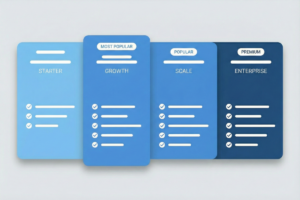
Starter Package: $2,500–$5,000/month
What you get: 2-3 core services (typically SEO + social media, or PPC + email). One dedicated account manager. Monthly reporting. 20-40 hours of work monthly.
Who it's for: Small businesses under $500K revenue, startups testing agency partnerships, or companies needing specific channel expertise.
What you won't get: Video production, custom web development, or 24/7 support. Expect templated strategies adapted to your business, not fully custom builds.
Reality check: At this tier, you're getting junior-to-mid-level talent executing proven playbooks. That's fine if your needs are straightforward. If your market is competitive or your sales cycle is complex, you'll outgrow this fast.
Growth Package: $5,000–$10,000/month
What you get: 4-6 integrated services. Senior strategist oversight. Weekly check-ins. Custom campaigns. A/B testing. 60-100 hours monthly. Access to specialized tools (analytics platforms, design software, automation systems).
Who it's for: Businesses doing $500K–$3M annually. Companies ready to scale but lacking in-house marketing leadership. Organizations where marketing directly drives revenue.
What you won't get: Multiple campaigns running simultaneously across all channels. You'll need to prioritize. Expect 2-3 major initiatives per quarter with ongoing optimization of existing channels.
Reality check: This is the sweet spot for most growing businesses. You get strategic thinking plus solid execution. Agencies at this price point should be showing you 3:1 to 5:1 ROI within six months.
Scale Package: $10,000–$15,000/month
What you get: Full-service marketing department. 6-10 services integrated under one strategy. Dedicated team (strategist, account director, specialists). Custom dashboards. Priority support. 120-180 hours monthly. Quarterly strategy sessions.
Who it's for: Businesses over $3M revenue with aggressive growth targets. Companies in competitive markets needing sophisticated multi-channel campaigns. Organizations where 5% conversion improvement equals six-figure revenue impact.
What you won't get: Immediate massive wins (though you'll see progress quickly). Real compounding growth takes 6-12 months. Also don't expect unlimited revisions or instant responses at 2am (unless you're paying premium rates).
Reality check: At this investment level, you should be assigned senior talent who've managed campaigns with budgets 10x yours. Demand case studies in your industry. Expect data-driven strategy reviews, not feel-good reports.
Enterprise Package: $15,000+/month
What you get: Whatever you need. White-glove service. C-suite level strategic consulting. Custom technology integrations. Multiple simultaneous campaigns across all channels. Dedicated teams. Real-time reporting.
Who it's for: Companies doing $10M+ annually. Brands with complex multi-location, multi-product, or multi-audience challenges. Organizations where marketing attribution models involve 10+ touchpoints.
Reality check: You're paying for the agency's A-team and direct access to leadership. If you're handed off to junior staff after the sales pitch, you're being overcharged.
Project-Based Pricing
Some agencies offer project work instead of retainers. Here's what specific deliverables actually cost:
- Website Redesign: $10,000–$50,000 (depends on complexity, custom functionality, and content volume)
- SEO Audit & Strategy: $3,000–$10,000 (one-time diagnostic with 90-day roadmap)
- Brand Identity Package: $5,000–$25,000 (logo, style guide, messaging framework)
- Video Production: $2,000–$15,000 per video (depends on shoot days, locations, editing complexity)
- Marketing Strategy Development: $5,000–$20,000 (comprehensive 12-month plan with quarterly milestones)
- Content Marketing Package: $3,000–$8,000/month for 4-8 high-quality pieces (blog posts, videos, infographics)
Project pricing works well for one-off needs or testing an agency before committing to a retainer. The downside: no ongoing optimization. You get the deliverable, but not the continuous improvement that drives compounding results.
Performance-Based Pricing
This is where agencies put their money where their mouth is. You pay based on results delivered—leads generated, revenue created, cost per acquisition improvements.
Common structures:
- Base retainer ($2,000–$5,000) + percentage of revenue generated (3-10%)
- Cost per lead (varies wildly: $50 for B2C, $500+ for B2B, $5,000+ for enterprise)
- Revenue share (agency gets 10-20% of sales they directly attribute)
Why it's rare: Most businesses lack the tracking infrastructure to accurately attribute revenue. Your sales team closes deals from multiple touchpoints—website, email, referrals, past brand awareness. Which touchpoint gets credit?
When it works: E-commerce with clear attribution. Lead generation businesses with defined conversion paths. SaaS companies with solid analytics showing marketing source to customer conversion.
The catch: Performance agencies cherry-pick clients. They want businesses with proven products, established sales processes, and short sales cycles. If your average deal takes 9 months to close, they'll pass—too much risk.
Hidden Costs Nobody Mentions
Your agency retainer doesn't include everything. Here are the extras that surprise businesses:
Advertising Spend (Biggest One):
If you're running PPC, Facebook ads, or LinkedIn campaigns, you pay the platforms directly. Budget $2,000–$50,000 monthly depending on your market and goals. The agency manages the ads—you pay for the clicks.
Software & Tools:
Premium analytics, SEO tools, email platforms, CRM systems. Agencies either charge this separately ($200–$1,000 monthly) or build it into their retainer. Ask upfront.
Creative Assets:
Stock photos, custom graphics, video shoots. Some agencies include basic design, but professional photography or video production often costs extra.
Implementation Costs:
Website changes, technical SEO fixes, integrations. If your site is built on a platform the agency doesn't specialize in, expect hourly charges ($100–$200/hour) for development work.
Onboarding Fees:
Some agencies charge first-month setup fees ($1,000–$5,000) covering audits, strategy development, and account setup. Others build this into months 1-2 of the retainer.
The Real ROI Calculation
Here's how to know if you're getting value:
Calculate your customer acquisition cost (CAC):
Total marketing spend ÷ new customers acquired = CAC
Compare to customer lifetime value (LTV):
Average customer value × average retention period = LTV
Healthy ratio: LTV should be 3x to 5x your CAC. If you spend $1,000 to acquire a customer, they should generate $3,000–$5,000 in profit.
Example:
You pay an agency $8,000/month. They generate 40 qualified leads. Your sales team closes 25% (10 customers). Your average customer is worth $5,000 in profit.
- Marketing cost: $8,000
- Revenue generated: $50,000
- ROI: 525% ($50,000 - $8,000) ÷ $8,000 × 100
That's a home run. Even at 200-300% ROI, you're winning. Anything under 100%? Time to have serious conversations or find a new agency.
What Should You Actually Pay?
Here's the framework: invest 5-15% of revenue in marketing if you're growing. Allocate 30-50% of that marketing budget to agency services if you lack in-house expertise.
Example:
$2M annual revenue → $100K–$300K marketing budget → $30K–$150K for agency services → $2,500–$12,500 monthly retainer.
The businesses that grow fastest don't cheap out on marketing—they invest strategically and measure ruthlessly. Hire the best agency you can afford, give them 6 months to prove ROI, then scale investment into what's working.
If an agency won't discuss pricing until they "understand your needs," that's a red flag. Transparency matters. If they can't show you a clear path to 3:1 ROI or better, walk away.
5 Signs You Need a Marketing Agency Now
Most businesses wait too long to hire help. They keep "doing it themselves" until revenue plateaus, competitors dominate their market, or they've wasted six months on tactics that don't work. Here's how to know you're past the DIY stage.
Sign #1: Revenue Plateaued Despite Your Effort
You're posting on social media. Your website looks decent. You've tried Google Ads. Maybe you're even blogging. But revenue flatlined six months ago and you can't figure out why.
What's really happening: You're guessing instead of testing. You're using tactics, not strategy. You lack the specialized expertise to diagnose what's broken—is it your messaging, your targeting, your offer, your funnel, your follow-up, or all five?
The cost of waiting: Every month you plateau, competitors gain market share you'll never recover. If you're stuck at $750K revenue when you should be at $1.2M, that's $450K annually you're leaving on the table. An agency costing $60K/year that gets you to $1.2M is a 650% ROI.
The agency solution: Fresh external perspective identifies blind spots. They've seen your exact problem 50 times before in other industries and know the fix. They bring proven systems instead of trial-and-error experimentation.
DIY vs. Agency comparison:
Doing it yourself: $0 agency cost + $100K opportunity cost (lost revenue) = $100K real cost
Hiring agency: $60K agency cost + $0 opportunity cost (revenue grows to target) = $60K investment with $450K return
You're not saving money by doing it yourself. You're just measuring the wrong costs.
Sign #2: Scattered Tactics With No Integrated Strategy
You're active on three social platforms, running occasional Google Ads, sending sporadic emails, and updating your website when you remember. Nothing connects. Each channel operates independently, pulling in different directions.
What's really happening: You're creating expensive chaos. Your social media promises one thing, your website says something different, and your emails have yet another message. Customers are confused. Confused customers don't buy.
The 90% video mistake: Here's a stat most businesses ignore—90% of competitors aren't using video marketing. Video generates 1,200% more shares than text and images combined. While you're debating whether to post on Instagram or LinkedIn, you're missing the highest-ROI channel entirely.
The agency solution: Agencies apply the Triple Foundation System—your website, Google Business Profile, and video content working together. When these three align, marketing ROI doesn't just improve—it multiplies. You get integrated campaigns where every channel reinforces the others instead of competing.
What integration actually looks like:
Video testimonial → embedded on website → drives organic traffic from YouTube SEO → captured in email list → nurtured through automated sequence → retargeted on Facebook → converted to customer → asked for Google review → creates social proof that attracts next customer.
That's a system. What you're doing now? That's random activity.
Sign #3: Can't Tie Marketing Spend to Actual Revenue
You know you spent $5,000 on Facebook ads last quarter. You have no idea how many customers it generated or what your return was. Your "analytics" consist of checking follower counts and feeling good when posts get likes.
What's really happening: You're drowning in vanity metrics—impressions, reach, engagement rate, followers. None of those pay your bills. You need attribution: which marketing dollar generated which revenue dollar?
The vanity metrics trap: An agency that reports "30% increase in social media engagement!" without connecting it to lead flow or revenue is selling you snake oil. Engagement is great. Revenue is what matters.
The agency solution: Real agencies implement tracking from first touchpoint to final sale. They use UTM parameters, conversion pixels, call tracking, and multi-touch attribution models to show exactly which channels drive revenue and which are burning cash.
What you should see in reports:
- Cost per acquisition by channel (SEO: $150, PPC: $280, Social: $320)
- Customer lifetime value by source (Organic: $3,200, Paid: $2,100)
- Marketing ROI by campaign (Email nurture: 620%, Facebook ads: 180%)
- Revenue attribution by touchpoint (first click, last click, multi-touch)
If your current marketing reports don't look like this, you're flying blind. Agencies that measure what matters show you exactly where to invest more and where to cut spending.
Sign #4: In-House Team Lacks Specialized Skills
Your team is smart. They're trying hard. They're also generalists running on Google searches and "best practices" blog posts. They know enough to be dangerous but not enough to compete against specialists who've run 500+ campaigns.
The expertise gap breakdown:
Your generalist marketing coordinator knows:
- How to post on social media (surface level)
- How to write blog posts (without SEO optimization)
- How to use Canva (basic design)
- How to send emails (without segmentation or automation)
A specialized agency team includes:
- SEO strategist who lives in algorithm updates and technical audits
- PPC specialist managing $2M+ annually in ad spend
- Conversion rate optimization expert who's A/B tested 1,000+ pages
- Video producer using neuropsychological research for emotional impact
- Analytics specialist building multi-touch attribution models
The brain science difference: Good agencies don't rely on "creative ideas." They apply Conversion Science™—research-backed psychological triggers that influence decision-making. Your customers' brains decide whether to trust you in 50 milliseconds, way before logic kicks in. Agencies that understand this outperform those that just make things look pretty.
Cost comparison:
Hiring in-house specialists: $150K+ annually (SEO manager + PPC specialist + content marketer + designer = 4 salaries + benefits + software + training)
Agency with same expertise: $60K–$120K annually (all specialists, all software, no benefits, scalable)
The agency also brings cross-industry insights your in-house team will never have. They've solved problems in e-commerce, SaaS, nonprofit, and B2B—applying proven solutions from one vertical to another.
Sign #5: Burning Time on Low-Value Marketing Tasks
Your CEO is writing social media posts. Your sales director is editing website copy. Your operations manager is trying to figure out Google Analytics. Everyone's doing marketing because "someone has to," but nobody's doing the high-value work that actually grows the business.
The opportunity cost calculation:
If your CEO's time is worth $200/hour and they spend 10 hours monthly on marketing tasks an agency specialist could do in 3 hours:
- CEO wasted time: 7 hours × $200 = $1,400 monthly = $16,800 annually
- Plus: Quality of work from non-specialist vs. specialist (CEO posts get 50 likes, agency posts generate 5 leads)
What you should be doing instead: Your CEO should be closing major deals and building partnerships. Your sales team should be selling. Your operations team should be delivering excellent service. Marketing is a full-time job requiring full-time expertise.
The agency leverage:
You spend 2 hours monthly in strategy calls. The agency executes 100+ hours of specialized work. You get 50:1 leverage on your time while ensuring marketing runs on proven systems, not improvisation.
The Self-Assessment Scorecard
Give yourself 1 point for each statement that's true:
- [ ] Revenue growth stalled for 3+ months despite marketing efforts
- [ ] Marketing channels don't work together in an integrated system
- [ ] Can't clearly connect marketing spend to revenue generated
- [ ] Team lacks deep expertise in key channels (SEO, PPC, video, conversion optimization)
- [ ] Leadership spends 5+ hours weekly on marketing tasks
- [ ] Tried DIY marketing for 6+ months with disappointing results
- [ ] Competitors outrank you in Google search
- [ ] Social media engagement doesn't convert to leads
- [ ] Don't have time to test, measure, and optimize campaigns
- [ ] Website traffic isn't growing or converts poorly
- [ ] Lack clear marketing strategy with measurable milestones
- [ ] Don't know your customer acquisition cost or lifetime value
- [ ] Haven't used video marketing (while 90% of competitors also ignore it)
- [ ] Current marketing feels like throwing spaghetti at the wall
- [ ] Spending money on tactics without clear ROI expectations
Your Score:
- 0-3 points: You might be able to DIY for now, but watch for these warning signs
- 4-7 points: You're past the DIY stage. An agency would deliver immediate value
- 8-11 points: You're losing significant revenue every month you wait
- 12-15 points: You're in crisis mode. Hire an agency yesterday
The businesses that scale fastest recognize when they need specialized help and act decisively. The ones that plateau keep telling themselves "we'll figure it out eventually" while competitors capture their market share.
Stop guessing. Start converting.

How to Choose the Right Marketing Agency
(Using Brain Science, Not Gut Feel)
Most businesses choose agencies based on who's got the prettiest portfolio or the smoothest sales pitch. That's backwards. Your customers' brains decide whether to trust you in 50 milliseconds—way before conscious thought kicks in. The agency you hire should understand this neuropsychological reality, not just know how to make things look nice.
Here's the framework we use to evaluate whether an agency actually gets conversion psychology or if they're just rearranging deck chairs on the Titanic.
The 8-Point Conversion Science™ Checklist
This isn't about asking agencies to list their services or show you their client roster. This is about determining whether they understand the psychological triggers that drive human decision-making—or if they're operating on opinions and vibes.
1. Do They Lead With Results or Portfolio?
When you talk to an agency, listen to what they emphasize first.
Red flag agency says: "We've won 12 design awards and our creative work has been featured in industry publications. Let me show you our portfolio."
Conversion-focused agency says: "Our last client in your industry saw 42% conversion rate improvement in 90 days, generating an additional $180K in revenue. Here's the before-and-after data and the psychological principles we applied."
Why this matters: Awards measure aesthetic appeal to other marketers. Your customers don't care about design awards—they care about whether your offer solves their problem. Agencies that lead with data understand this. Agencies that lead with portfolio are designing for their ego, not your revenue.
What to ask: "Can you show me the specific conversion rate improvements you've delivered in the last 12 months, not just traffic increases or engagement metrics?"
If they can't answer with numbers, walk away.
2. Do They Understand the 50-Millisecond Trust Window?
Research shows people form first impressions in 50 milliseconds—one-twentieth of a second. That's faster than conscious thought. Your website, your Google Business Profile, your social media presence—all of it is being judged subconsciously before logic ever engages.
Test question to ask: "How do you apply neuropsychological research to website design and messaging?"
Red flag answer: Blank stares, or vague mentions of "we make things user-friendly" or "we follow best practices."
Conversion-focused answer: Specific references to cognitive load theory, emotional triggering, trust signals, social proof placement, color psychology research, or pattern interruption techniques. They should mention concepts like the Von Restorff effect, anchoring bias, or scarcity principles—and explain how they apply them.
Why this matters: Agencies that understand brain science design for how humans actually make decisions (emotionally first, logically second). Agencies that don't are guessing with your money.
3. Can They Explain the Triple Foundation System?
Most agencies think in channels: "You need SEO" or "You should run Facebook ads" or "Let's post on Instagram." That's siloed thinking. Real growth happens when three specific elements work together as a system.
The Triple Foundation System:
- Your Website - Conversion-optimized to turn visitors into customers
- Your Google Business Profile - Dominates local search and builds trust
- Your Video Content - Creates emotional connections that text can't match
When these three align, marketing ROI doesn't just improve—it multiplies. Each element amplifies the others.
Example of integration:
Video testimonial (emotional trust) → posted on Google Business Profile (local visibility + social proof) → embedded on website service page (conversion reinforcement) → drives organic traffic from YouTube SEO → captures leads through optimized forms → nurtures through email with more video content → retargets video viewers with specific offers → converts at 3x higher rate than cold traffic.
Test question to ask: "How do you ensure our website, local search presence, and video content work together instead of operating independently?"
Red flag answer: They talk about each channel separately without explaining integration points or compounding effects.
Conversion-focused answer: They explain specific ways video improves website conversion rates, how Google Business Profile rankings benefit from website authority, and how video content on your profile increases click-through rates by 40-60%.
Why this matters: Agencies stuck in channel silos create expensive chaos. Agencies that think in systems create compounding results.
4. Do They Obsess Over Vanity Metrics or Revenue Metrics?
Here's how to spot an agency that's selling smoke and mirrors: they report metrics that don't connect to your bank account.
Vanity metrics that don't pay bills:
- Social media followers (unless you sell directly to them)
- Website traffic (unless it converts)
- Impressions and reach (unless they become customers)
- Engagement rate (unless it drives action)
- Email list size (unless they buy)
Revenue metrics that actually matter:
- Cost per acquisition (CAC)
- Customer lifetime value (LTV)
- Return on ad spend (ROAS)
- Conversion rate by channel
- Revenue attributed to marketing
- Pipeline value generated
- Qualified leads delivered
Test question to ask: "What metrics will you use to measure success, and how do they connect to revenue?"
Red flag answer: They promise to "increase brand awareness," "grow your social following," or "improve engagement" without connecting those to revenue outcomes.
Conversion-focused answer: "We'll track cost per acquisition by channel, monitor conversion rate improvements on your key landing pages, and show you the revenue generated from each marketing dollar spent. Here's what 'success' looks like in months 3, 6, and 12."
Why this matters: You can't deposit "brand awareness" at the bank. Agencies that report vanity metrics are hiding the fact that they can't deliver real results.
5. Have They Proven the 90% Video Advantage?
Here's a stat that should change everything: 90% of businesses are sleeping on video marketing. They're fully ignoring the channel that generates 1,200% more shares than static content and converts 80% better than text-only pages.
While your competitors debate whether to post on Instagram or TikTok, there's a massive opportunity sitting right in front of them. The agencies that understand this are partnering with video producers who apply brain science to storytelling—using research-backed emotional triggers, not just "creative ideas."
Test question to ask: "How do you incorporate strategic video into marketing campaigns, and what results have you seen?"
Red flag answer: "We can add some videos to your social media" or "Video is nice-to-have but expensive."
Conversion-focused answer: "Video is non-negotiable for serious growth. We've seen clients generate 1,200% more shares with video content versus static posts, and video on landing pages improves conversion rates by 80%. We partner with award-winning producers who understand neuropsychological storytelling—creating emotional connections that drive action. Here are three case studies showing revenue impact from strategic video."
Why this matters: Video isn't a nice-to-have anymore. It's the highest-ROI channel most businesses ignore. Agencies that treat it as optional are leaving massive money on the table.
6. Can They Show You The 30-60% Conversion Improvement?
Any agency can claim they "grow businesses." Conversion-focused agencies can show you the specific percentage improvement their methodology delivers across 500+ implementations.
What to look for: Case studies showing before-and-after conversion rates with specific timeframes. Not testimonials. Not vague "we helped them grow" statements. Actual data.
Example of real proof:
- Landing page A: 2.3% conversion rate (before) → 4.1% conversion rate (after) = 78% improvement
- Email sequence: 12% click-through rate (before) → 23% click-through rate (after) = 92% improvement
- PPC campaign: $145 cost per acquisition (before) → $87 cost per acquisition (after) = 40% cost reduction
Test question to ask: "Can you show me three examples where you've improved conversion rates by 30% or more, with the specific tactics you used?"
Red flag answer: They show you pretty websites or talk about "strategy" without showing measurable conversion improvements.
Conversion-focused answer: They pull up actual dashboards, before-and-after screenshots, and walk you through the psychological principles they applied to achieve specific percentage improvements.
Why this matters: The difference between a 2% conversion rate and a 4% conversion rate is double your revenue from the same traffic. Agencies that can't prove conversion improvements are guessing.
7. Do They Apply the Growth Triangle™ or Random Tactics?
Marketing isn't about throwing tactics at the wall. It's about moving people through three specific stages: Attract → Nurture → Convert. Every campaign, every piece of content, every dollar spent should map to one of these stages.
The Growth Triangle™ framework:
Attract: Get the right eyeballs on your business through SEO, paid advertising, social media, video content, and local search optimization. Not just any traffic—qualified traffic that matches your ideal customer profile.
Nurture: Build relationships and trust through email sequences, retargeting, content marketing, and educational resources. This is where brain science matters most—understanding the psychological journey from awareness to consideration.
Convert: Remove friction and trigger action through optimized landing pages, compelling offers, social proof, and follow-up systems. Apply conversion rate optimization principles grounded in behavioral psychology.
Test question to ask: "How do you structure campaigns to move people from awareness to conversion, and what metrics do you track at each stage?"
Red flag answer: They talk about individual tactics (SEO, Facebook ads, email) without explaining how they work together in a cohesive system.
Conversion-focused answer: "We map every tactic to the Growth Triangle. SEO and video attract cold traffic. Email and retargeting nurture warm leads. Optimized landing pages and strategic offers convert ready buyers. Here's how we track movement through each stage and optimize based on drop-off points."
Why this matters: Random tactics create expensive chaos. Systematic frameworks create predictable, scalable growth.
8. Will They Give You 6 Months or Demand 12-Month Contracts?
Agencies confident in their methodology give you reasonable time to see results without trapping you in long contracts. Agencies afraid you'll leave after seeing no results lock you into 12-18 month agreements.
Reasonable contract terms:
- 3-6 month initial commitment (enough time to show measurable progress)
- Clear performance milestones (what you should see by month 3, 6, 12)
- Transparent reporting (weekly or monthly dashboards, not quarterly summaries)
- Exit clauses tied to performance (if they miss agreed metrics, you can leave)
Red flag contract terms:
- 12+ month minimum commitment with no performance guarantees
- Vague success metrics ("we'll grow your brand awareness")
- Auto-renewal clauses that trap you
- Huge cancellation penalties
Test question to ask: "What's your minimum commitment, and what specific results should I expect to see by month 3 and month 6?"
Red flag answer: "We need at least 12 months to show results, and marketing is a long-term investment you can't measure quickly."
Conversion-focused answer: "We typically recommend 6 months. By month 3, you should see measurable improvements in key metrics—conversion rates, cost per acquisition, or lead quality. By month 6, we should have clear ROI data showing whether to scale investment or pivot strategy."
Why this matters: Confidence in methodology = flexible contracts. Agencies demanding long commitments without performance guarantees are covering for weak results.
The One Question That Reveals Everything
After you've asked all eight diagnostic questions, here's the final test:
"If we hire you, what specific percentage improvement in [revenue/leads/conversions] should we expect to see in 6 months, and what happens if you don't deliver that?"
Agencies that understand Conversion Science™ will give you a specific answer based on your industry, current performance, and budget. They'll explain the methodology, show you similar case studies, and commit to measurable outcomes.
Agencies guessing with opinions will deflect, say "every business is different," refuse to commit to numbers, or hide behind vague promises about "brand building" and "long-term growth."
The Conversion Science Difference
Here's what separates agencies that engineer results from those that create pretty campaigns: brain science beats creative guessing every single time.
Your customers don't buy based on how aesthetically pleasing your Instagram grid looks. They buy based on neuropsychological triggers—trust signals, emotional resonance, social proof, scarcity, authority, and pattern interruption.
Agencies that understand this build campaigns targeting the brain's decision-making system: the limbic system (emotion) first, the neocortex (logic) second. Agencies that don't understand this make things look nice and hope for the best.
After 500+ implementations, the data is clear: Conversion Science™ methodology delivers 30-60% average improvement in conversion rates. Not because of magic tricks. Because of applied neuropsychology, relentless testing, and ruthless optimization.
When you're evaluating agencies, don't fall for the portfolio pitch. Ask the eight diagnostic questions. Demand proof of conversion improvements, not design awards. Choose the agency that understands brain science, not the one with the smoothest sales deck.
Your revenue growth depends on it.

Marketing Agency ROI & Performance Metrics (What Results to Expect)
You hired an agency. Now what? How do you know if they're actually delivering value or just sending you reports full of impressive-sounding numbers that don't connect to revenue?
Most agencies bury you in data—page views, impressions, clicks, engagement rates. That's noise. What matters is whether marketing dollars translate to customer dollars. Here's how to measure what actually counts.
The Only ROI Formula You Need
Marketing ROI isn't complicated. Agencies that make it complicated are hiding something.
The formula:
(Revenue from marketing - Marketing costs) ÷ Marketing costs × 100 = ROI%
Real example:
Revenue generated: $75,000
Marketing costs (agency + ad spend): $15,000
ROI: ($75,000 - $15,000) ÷ $15,000 × 100 = 400%
For every dollar you spent, you made back $5. That's a winner.
What's a good ROI? Aim for 3:1 to 5:1 within 6-12 months. Anything above 5:1 is exceptional. Below 2:1 means something's broken. Below 1:1 means you're losing money and need to fix it immediately or fire the agency.
Key Metrics That Actually Drive Decisions
Stop accepting reports that celebrate vanity metrics. Demand these instead:
1. Customer Acquisition Cost (CAC)
How much you spend to acquire one new customer, broken down by channel.
Formula: Total marketing spend ÷ new customers acquired = CAC
What to track:
- SEO CAC: Typically $50-$200 (long-term investment)
- PPC CAC: $100-$500 depending on industry
- Social media CAC: $150-$400
- Email marketing CAC: $20-$100 (lowest cost, highest ROI)
- Video marketing CAC: $75-$250 (if done right)
Why it matters: If your average customer is worth $5,000 and your CAC is $200, you're winning. If your CAC is $6,000, you're burning cash.
Red flag: Agencies that report "leads generated" without showing how many converted to paying customers. Leads mean nothing if they don't buy.
2. Customer Lifetime Value (LTV)
The total profit one customer generates over their entire relationship with your business.
Formula: Average purchase value × purchase frequency × customer lifespan = LTV
Example:
Customers spend $500 per purchase, buy 4 times per year, stay for 3 years = $6,000 LTV
Why it matters: LTV tells you how much you can afford to spend on acquisition. If your LTV is $6,000 and your CAC is $500, you have an 11:1 return. You should be spending MORE on marketing, not less.
The golden ratio: LTV should be 3x to 5x your CAC. Below 3x means your margins are too thin. Above 5x means you're leaving growth on the table—spend more to acquire more customers.
3. Return on Ad Spend (ROAS)
For paid advertising specifically, how much revenue each ad dollar generates.
Formula: Revenue from ads ÷ ad spend = ROAS
Benchmark targets:
- Google Search Ads: 4:1 to 8:1 ROAS
- Facebook/Instagram Ads: 3:1 to 6:1 ROAS
- LinkedIn Ads (B2B): 2:1 to 4:1 ROAS (higher CAC, higher LTV)
- Display/Banner Ads: 2:1 to 3:1 ROAS
Why it matters: ROAS shows which advertising channels justify their cost. If your Google Ads generate 6:1 ROAS and Facebook Ads only hit 1.5:1, shift budget to Google.
4. Conversion Rate by Channel
What percentage of visitors from each source become customers.
Industry benchmarks:
- Organic search: 2-5% conversion rate
- Paid search: 2-10% conversion rate
- Social media: 1-3% conversion rate
- Email marketing: 5-15% conversion rate
- Direct traffic: 5-12% conversion rate
Why it matters: A 2% conversion rate vs. 4% conversion rate is double your customers from the same traffic. Small improvements here create massive revenue gains.
What agencies should show you: Monthly conversion rate trends with specific tactics they tested to improve it (new landing page design, different offer, revised copy, added video, social proof placement).
5. Pipeline Value Generated
For B2B companies with longer sales cycles, track the total value of opportunities created by marketing.
What to measure:
- Marketing Qualified Leads (MQLs) generated
- Sales Accepted Leads (SALs) passed to sales team
- Opportunities created (deals in pipeline)
- Total pipeline value ($)
- Win rate of marketing-sourced deals
Why it matters: If marketing generates $500K in pipeline value monthly and closes at 25%, that's $125K in revenue. Track this over time to prove marketing's contribution even when sales cycles are 6-12 months.
Realistic Timeline Expectations (Stop Expecting Miracles)
Different channels have different speed-to-results. Agencies promising instant wins in slow channels are lying.
Immediate results (2-4 weeks):
- PPC campaigns (once optimized)
- Retargeting ads
- Email campaigns to existing lists
Short-term results (1-3 months):
- Social media engagement
- Content marketing momentum
- Landing page optimization
- Conversion rate improvements
Medium-term results (3-6 months):
- SEO rankings for low-competition keywords
- Organic traffic growth
- Brand awareness in local markets
- Video content traction
Long-term results (6-12 months):
- SEO rankings for competitive keywords
- Compounding organic traffic
- Brand authority establishment
- Referral and word-of-mouth growth
Reality check: Any agency promising "page one rankings in 30 days" or "10x revenue in 90 days" is selling fantasies. Real growth is built on consistent testing, data-driven optimization, and strategic patience.
Month-by-Month Expectation Guide
Month 1: Foundation (Don't expect revenue yet)
- Comprehensive audit completed
- Strategy document delivered
- Tracking and analytics configured
- Initial campaigns launched
- Baseline metrics established
What you should see: Clear plan, transparent communication, proof they understand your business.
Month 2-3: Implementation & Early Signals
- Campaigns fully running across agreed channels
- First round of A/B tests launched
- Early data on what's working
- Conversion rate improvements starting (5-15%)
- Lead flow increasing
What you should see: Weekly metric updates, initial positive trends, optimization based on data.
Month 4-6: Optimization & Measurable Growth
- Clear winners and losers identified
- Budget shifted to high-performers
- Conversion rates improving 20-40%
- CAC decreasing as campaigns optimize
- ROI becoming clearly positive
What you should see: 3:1 ROI minimum, specific proof points of growth, transparent reporting on what's working and what's not.
Month 7-12: Scaling & Compounding Results
- Proven tactics scaled with increased budget
- New channels tested based on success patterns
- Systems and processes refined
- 30-60% conversion improvement over baseline
- 5:1+ ROI as compounding effects kick in
What you should see: Exponential growth, not just linear. Marketing becomes a predictable revenue driver, not a guessing game.
When to Fire Your Agency
Sometimes it's not working. Here are the specific triggers that mean it's time to cut ties:
Fire immediately if:
- They guarantee specific rankings or overnight results (they're lying)
- They won't share login credentials to your accounts (they're hiding something)
- They use black-hat tactics (buying followers, link schemes, fake reviews)
- They're unresponsive for days or weeks at a time
- Reports are vague or full of vanity metrics without revenue connection
Fire after 3-6 months if:
- No measurable improvement in key metrics (CAC, conversion rate, ROAS)
- ROI is negative or barely break-even with no improvement trajectory
- They can't explain what they're doing or why
- Promised deliverables consistently missed
- No evidence of testing, learning, or optimization
Don't fire prematurely if:
- You're only 2 months in (unless major red flags)
- Metrics are improving but not as fast as you hoped (growth takes time)
- You haven't given them the resources they need (content, access, budget)
- Market conditions changed dramatically (recession, algorithm update, competitive shift)
The key distinction: Are metrics trending in the right direction with clear evidence of strategic thinking? Keep them and be patient. Are metrics flat or declining with no clear plan to fix it? Fire them and find someone who actually knows what they're doing.
What Good Reporting Actually Looks Like
Demand this level of transparency every month:
Executive Summary (2-3 sentences): "Revenue from marketing increased 23% to $87,000. CAC decreased 15% to $210. Conversion rate improved from 2.8% to 3.9%. Recommendation: Scale Google Ads budget by $2,000/month based on 6:1 ROAS."
Channel Performance Table:
| Channel | Spend | Revenue | ROAS | CAC | Leads | Conversions |
|---|---|---|---|---|---|---|
| SEO | $0 | $12,000 | ∞ | $85 | 42 | 11 |
| Google Ads | $8,500 | $51,000 | 6:1 | $320 | 53 | 16 |
| $3,200 | $9,600 | 3:1 | $400 | 24 | 8 | |
| $0 | $14,400 | ∞ | $65 | 78 | 22 |
Key Insights & Actions:
- Google Ads outperforming—scaling budget next month
- Facebook CAC too high—testing new audience segments
- Email converting well—increasing send frequency
- SEO showing momentum—6 keywords moved to page 1
Month-Over-Month Trends: Graph showing revenue, CAC, and conversion rate over last 6 months with annotations explaining major changes.
If your agency isn't providing this level of detail, they're either incompetent or hiding poor performance.
When to Fire Your Marketing Agency (Red Flags You Can't Ignore)
Sometimes the relationship isn't working. Here are the red flags that mean it's time to end the engagement:
Fire immediately if:
- They miss agreed-upon deliverables 2+ months in a row
- Reports show fabricated or misleading data
- They refuse to grant you access to your own accounts (Google Ads, Analytics, social profiles)
- Communication drops to zero—no responses within 48 hours
- They pitch "new strategies" every month instead of optimizing what exists
Fire after 6 months if:
- ROI is below 1:1 (you're spending more than you're earning)
- Traffic increased but conversions stayed flat (wrong audience targeting)
- No A/B testing or optimization happening—just set-and-forget campaigns
- Reports focus on vanity metrics (likes, impressions) instead of revenue
- They can't explain their strategy or results in plain English
The exit process:
- Document all performance gaps in writing with specific examples
- Request immediate access credentials to ALL accounts and platforms
- Download reports, creative assets, and customer data
- Review contract for cancellation terms and notice requirements
- Send formal termination notice per contract specifications
- Verify all logins, passwords, and ownership transfer to you
- Revoke agency access within 24 hours of final payment
What you own (and must get back): Website and hosting access, email subscriber lists, social media accounts and followers, Google Business Profile, Google Ads and Facebook Ads accounts, all customer data and CRM information, creative assets made specifically for your brand.
Don't let agencies hold your digital assets hostage. Verify ownership transfers before you pay the final invoice.

7 Expensive Mistakes When Hiring a Marketing Agency
Smart businesses still make dumb mistakes when choosing agencies. Why? Because agencies are really good at selling. Here are the seven most costly mistakes—and how to avoid them without getting burned.
Mistake #1: Choosing Based on Price Alone
The trap: You get three proposals. One agency quotes $3,000/month, another $8,000/month, third $12,000/month. You pick the cheapest because "marketing is marketing, right?"
Wrong.
The real cost: The $3,000 agency assigns you junior talent who execute cookie-cutter strategies with no customization. Six months later, you've spent $18,000 with zero ROI. Now you're starting over with a better agency, wasting time and money.
The math:
- Cheap agency: $18,000 spent, $0 revenue generated = -100% ROI
- Premium agency: $48,000 spent, $200,000 revenue generated = 317% ROI
Which one actually saved you money?
The fix: Evaluate on value delivered, not price charged. An $8,000 agency delivering 400% ROI costs less than a $3,000 agency delivering 0% ROI.
Question to ask: "What's your average client ROI after 6 months, and can you show me case studies proving it?"
Mistake #2: No Clear Goals or Success Metrics Defined
The trap: You hire an agency and tell them "we need more customers" without defining what "more" means or how you'll measure it.
The real cost: Agency reports "30% increase in website traffic!" You can't tell if it translated to revenue. Three months later, you still don't know if it's working because you never defined success.
The fix: Before signing anything, document these:
- Specific revenue target ($X in new revenue)
- Key metrics that matter (CAC under $Y, conversion rate above Z%)
- Timeline expectations (what should we see by month 3, 6, 12?)
- How we'll track attribution (which tools, what reports, who owns the data)
Put it in writing: "Success means generating $150,000 in attributed revenue within 6 months with CAC under $300. We'll track this using Google Analytics, CRM data, and monthly reconciliation meetings."
Now both sides know exactly what "success" looks like. No ambiguity. No moving goalposts.
Mistake #3: Ignoring Red Flags in Discovery Calls
The trap: Your gut tells you something's off—they promise guaranteed rankings, dodge pricing questions, don't ask about your business model—but you ignore it because you need help NOW.
The red flags that scream "run away":
- Guarantee specific rankings or results ("We'll get you to #1 on Google")
- Refuse to discuss pricing without multiple sales calls
- Don't ask detailed questions about your business, customers, or goals
- Can't provide case studies with actual data
- Speak in vague marketing jargon without specifics
- Pressure you to sign immediately with "limited time" offers
- No clear onboarding process or project plan
- Won't share which team members will actually do the work
The fix: Trust your instincts. If something feels off in the sales process, it'll be worse once you're a client.
Green flags of good agencies:
- Ask tough questions about your business model and goals
- Transparent about what they can and can't deliver
- Share detailed case studies with metrics
- Explain their process clearly
- Give you time to make an informed decision
- Provide references you can actually call
Mistake #4: Expecting Overnight Miracles
The trap: You sign a contract expecting your phone to ring off the hook by week two. When it doesn't, you panic and start micromanaging or threatening to leave.
The reality: Month 1 is strategy and setup. Months 2-3 show early signals. Months 4-6 deliver measurable growth. Anyone promising faster results is lying or using tactics that'll hurt you long-term.
The fix: Set realistic timelines based on your channels:
- PPC: 4-8 weeks to optimize
- SEO: 4-6 months for rankings
- Social: 2-3 months for community growth
- Email: 1-2 months for segmentation and automation
- Video: 2-4 months for content library and distribution
Question to ask: "What specific results should I realistically expect in months 1, 3, and 6?"
Any agency that won't give straight answers is hiding behind vagueness. Good agencies give you a month-by-month roadmap with measurable milestones.
Mistake #5: Not Maintaining Involvement
The trap: You hire an agency and think "great, I can completely hands-off this now." Months later, campaigns are misaligned because they didn't have the context only you can provide.
The reality: Agencies need your input on:
- Brand voice and messaging nuances
- Customer objections and pain points
- Product updates and new offerings
- Competitive insights from sales calls
- Budget changes or shifting priorities
The fix: Schedule standing meetings:
- Weekly 15-minute check-ins (quick status, blockers, questions)
- Monthly strategy reviews (performance analysis, next steps)
- Quarterly business alignment (big picture, goal adjustments)
Time commitment: Budget 2-4 hours monthly for agency collaboration. That's not a burden—it's the investment that ensures they stay aligned with your business reality.
Warning: If an agency never asks for your input or seems annoyed when you want to be involved, they're probably running cookie-cutter campaigns that ignore your unique value proposition.
Mistake #6: Falling for "We Do Everything" Agencies
The trap: An agency claims expertise in SEO, PPC, social media, video production, web development, email marketing, PR, content writing, graphic design, and cryptocurrency marketing. You think "perfect, one-stop shop!"
The reality: Agencies that claim to do everything are usually mediocre at most things. True expertise requires specialization. An SEO expert who's also a "social media guru" and "video production specialist" is probably decent at none of them.
How to spot the jack-of-all-trades:
- Service page lists 15+ specialties
- Case studies are vague or focus on different services
- Team bios show everyone wearing multiple hats
- Can't name specific tools or methodologies for each specialty
- No clear depth when you drill down on any one service
The fix: Hire for your specific needs:
- Need SEO? Hire an agency that lives and breathes search algorithms
- Need video? Partner with specialists who've produced 100+ videos
- Need full-service? Find agencies with dedicated specialists for each channel, not generalists doing everything
Question to ask: "Which services are handled in-house by specialists versus outsourced to contractors?"
If they outsource most work, you're paying a 30% markup for a middleman. Find the specialists directly.
Mistake #7: Skipping the Trial Period
The trap: You sign a 12-month contract based on a good sales pitch. By month 3, you realize the agency isn't a fit—different communication styles, misaligned priorities, weak results—but you're locked in.
The fix: Negotiate these contract terms:
Trial engagement options:
- 3-month pilot project before committing long-term
- Month-to-month for first 90 days, then longer commitment
- 6-month initial contract with 30-day cancellation clause
- Performance milestones that trigger contract continuation
What fair contracts look like:
- Clear deliverables and timelines
- Defined success metrics
- Reasonable termination clauses (30-60 days notice)
- No auto-renewal traps
- Transparent pricing with no hidden fees
Red flag contracts:
- 12+ month minimum with huge cancellation penalties
- Vague deliverables ("we'll help grow your brand")
- Auto-renewal unless you cancel 90 days in advance
- All IP and data belong to agency (you should own your data)
- Payment terms that front-load costs
Question to ask: "Can we start with a 3-month trial engagement before committing to a full year?"
Agencies confident in their work will say yes. Agencies afraid you'll leave after seeing results will insist on long commitments with no performance guarantees.

How to Negotiate with Marketing Agencies (Save $10K+ Annually)
Most people accept the first proposal. Smart buyers negotiate and save thousands. Here's how:
1. Request a Trial Period (3 Months)
- What to say: "Let's start with a 90-day engagement to prove the relationship works."
- Why it works: Agencies want long-term clients. They'll often agree to shorter trials at slightly higher rates.
- Typical savings: Avoid being locked into underperforming contracts
2. Bundle Services for Volume Discounts
- What to say: "If we add [service] to the package, what discount can you offer?"
- Why it works: Agencies prefer larger retainers over multiple small clients.
- Typical savings: 10-20% off standard rates
3. Negotiate Deliverable Flexibility
- What to say: "Instead of fixed deliverables, can we allocate hours based on what's performing?"
- Why it works: Agencies want satisfied clients who renew.
- Value gain: Better results by pivoting to what works
4. Request Performance-Based Pricing
- What to say: "Can we structure this as $X base + $Y per qualified lead?"
- Why it works: Shows you understand performance marketing.
- Risk reduction: Aligns agency incentives with your results
5. Ask About Off-Peak Discounts
- What to say: "Do you offer different rates for clients who commit during slower months?"
- Why it works: Agencies have feast-or-famine cycles.
- Typical savings: 15-25% for off-season starts
What NOT to negotiate: Quality of team assigned to your account, reporting frequency, account ownership. These are deal-breakers disguised as negotiation points.
Best leverage: Get 3-5 proposals, then use competition: "Agency X offered [specific term]. Can you match or improve on that?" Never lie—use real competitive quotes only.

The Real Choice You're Making
Choosing a marketing agency isn't about picking a vendor. It's deciding whether you'll keep guessing with your growth or engineer it with proven systems. Every month you operate without strategic marketing guided by brain science and measurable outcomes, competitors capture market share you'll never recover. That's not hyperbole—it's math.
Here's what separates businesses that scale from those that plateau: they understand marketing isn't about how pretty your Instagram looks or how many followers you've got. It's about conversion psychology, integrated systems, and ruthless optimization of what actually drives revenue. The Growth Triangle framework, the Triple Foundation System, Conversion Science methodology—these aren't buzzwords. They're tested frameworks that deliver 30-60% conversion improvements across 500+ implementations because they target how human brains actually make buying decisions.
You now have the 8-point evaluation checklist to separate agencies engineering results from those creating expensive chaos. You know the pricing ranges, the realistic timelines, the metrics that matter, and the red flags that scream "run away." You understand that cheap agencies delivering zero ROI cost more than premium agencies generating 400% returns.
The question isn't whether you can afford to hire the right agency. It's whether you can afford not to. Calculate your opportunity cost—the revenue you're leaving on the table every month you plateau. That number's bigger than any agency retainer.
Stop guessing. Start converting.

Marketing Agency FAQs
How much does a marketing agency cost per month?
Marketing agency costs range from $2,500 to $15,000+ monthly depending on services, team expertise, and business size. Starter packages ($2,500-$5,000) cover 2-3 core services like SEO and social media—good enough for small businesses testing the waters. Growth packages ($5,000-$10,000) provide integrated campaigns across 4-6 channels. Scale packages ($10,000-$15,000) deliver full-service marketing with dedicated teams. Enterprise clients over $10M revenue? They typically invest $15,000+ monthly because at that level, every percentage point of improvement equals serious money. Beyond retainers, budget for advertising spend ($2,000-$50,000 monthly depending on market), software tools ($200-$1,000), and occasional project costs.
What's the difference between a marketing agency and advertising agency?
Marketing agencies focus on comprehensive strategy across multiple channels—SEO, content marketing, email, social media, analytics, and brand development. They build long-term customer relationships and sustainable growth systems. Advertising agencies specialize primarily in creating and placing paid advertisements across TV, radio, print, and digital platforms. They excel at campaign creativity and media buying but typically don't handle SEO, email nurturing, or ongoing content strategy. Many modern agencies blur these lines, offering both marketing strategy and advertising execution under one roof.
How long does it take to see results from a marketing agency?
Results vary by channel and strategy. PPC campaigns show initial data in 2-4 weeks once optimized. Social media engagement and email marketing deliver results in 1-3 months. SEO typically requires 4-6 months for meaningful organic traffic growth and competitive keyword rankings. Conversion rate improvements often appear in months 2-4 as testing and optimization take effect. Expect measurable ROI by month 6, with compounding growth accelerating in months 7-12. Any agency promising overnight success or guaranteed rankings in 30 days is lying. Real growth requires strategic patience, continuous testing, and data-driven optimization.
What should I look for when hiring a marketing agency?
Evaluate agencies on results, not portfolios. Ask for case studies showing specific conversion rate improvements (30-60% or higher) with actual data. Verify they understand Conversion Science—neuropsychological principles that drive decision-making, not just aesthetic preferences. Demand transparent pricing, realistic timelines, and measurable success metrics (CAC, ROAS, conversion rates—not vanity metrics like followers). Check their methodology: do they apply systematic frameworks like the Growth Triangle or throw random tactics at the wall? Request references you can actually call. Negotiate reasonable contracts (3-6 months to start, not 12-month locks). Most importantly, ensure they lead with revenue metrics, not design awards.
Do small businesses need marketing agencies?
Yes, especially small businesses under $2M revenue who lack in-house marketing expertise. DIY marketing sounds cheap but costs more when you factor in opportunity cost—months wasted testing tactics that don't work while competitors capture market share. Small businesses benefit most from specialized marketing firms that fill critical skill gaps (SEO, PPC, video production) without the overhead of hiring full-time specialists at $60K-$80K+ salaries each. Start with a focused engagement ($2,500-$5,000 monthly) targeting your highest-impact channel. As revenue grows, scale to integrated campaigns. The key: measure ROI ruthlessly. If a marketing company delivers 3:1 to 5:1 return within 6 months, it's a smart investment regardless of business size.
What contract terms should I watch for when hiring marketing agencies?
Review these contract clauses carefully before signing: Contract length - Avoid 12+ month commitments initially; negotiate 3-6 month trials with option to extend. Auto-renewal - Watch for automatic renewal clauses; require 30-60 day cancellation notice, not 90+. Intellectual property - Verify YOU own all creative assets, content, and data created during engagement. Account access - Confirm you'll have admin-level access to all platforms (Google Ads, Analytics, social accounts) from day one. Termination for non-performance - Include specific performance metrics that trigger penalty-free cancellation. Payment terms - Watch for large upfront deposits (50%+); 25-30% retainers are standard. Scope creep protection - Define what's included vs. what triggers additional charges. Non-compete clauses - Ensure they won't work with direct competitors during your engagement. Red flags: contracts that make agency the account owner, require you to use their proprietary tools exclusively, or claim ownership of your customer data.
What's a retainer agreement with a marketing agency?
A retainer agreement is an ongoing monthly contract where you pay a fixed fee for a defined scope of marketing services and hours. Unlike project-based work (one-time deliverables), retainers provide continuous optimization, testing, and strategic guidance. Typical retainers include weekly or monthly deliverables (content pieces, ad management, reporting), dedicated account management, and guaranteed response times. Retainer benefits: predictable budgeting, priority access to agency talent, and compounding results from sustained effort. Fair retainer terms include 3-6 month initial commitments (not 12+ month locks), transparent pricing with itemized services, clear performance milestones, and reasonable cancellation clauses (30-60 days notice). Avoid auto-renewal traps and vague deliverables.
How do I find the best marketing agency for my business?
Start with Google searches for "[your industry] marketing agency" and "marketing agencies near me" to identify specialists. Check Clutch, UpCity, and Google Business reviews for verified client feedback and case studies. Ask your business network for referrals—accountants, lawyers, and other business owners often know which marketing companies deliver results. Attend local chamber of commerce events or industry conferences where agencies present. When evaluating options, prioritize agencies with proven experience in your industry, transparent pricing, measurable results (not just pretty portfolios), and chemistry with your team. Schedule consultations with 3-5 agencies, ask the hard questions from this guide, and request client references you can actually call. The best agency isn't always the biggest or most expensive—it's the one that understands your business model and can prove they've delivered ROI for similar companies.
What questions should I ask when interviewing marketing agencies?
Ask these 10 critical questions:
- "Show me three case studies where you improved conversion rates by 30%+ with data to prove it."
- "What specific results should I expect in 3, 6, and 12 months?"
- "Who exactly will work on my account—senior strategists or junior staff?"
- "How do you measure ROI and what reports will I receive?"
- "What's your testing and optimization process?"
- "Do you specialize in my industry?"
- "What's included in your retainer vs. what costs extra?"
- "What's your contract length and cancellation policy?"
- "How do you handle underperforming campaigns?"
- "Can I speak with three current clients?"
Agencies that provide vague answers, refuse to share data, or can't connect you with references are hiding weak results. Quality marketing firms answer directly with specifics and evidence.